Here’s how to find your perfect match! Sorry, I mean the right paper!

Matt or gloss, coated or uncoated – and which grammage should I choose? Sometimes the Choosing the right paper based on a popular TV dating programme from the 90s. The contestants never got to see each other, only to hear each other. After a more or less amusing round of questions, they had to choose a ‘Herzblatt’ following a ‘brief summary by Susi’. In many cases, this went well; in some cases, the experience wasn’t all that thrilling for either party.
What does ‘Herzblatt’ have to do with a tip about paper?
Ordering printed materials online offers many advantages. However, it can often be a major disappointment when, for the A carefully thought-out and long-developed idea the wrong material is chosen and processed. Much like on the TV show, a few key pieces of information are missing to make the right decision. A graphic designer naturally knows the different types of paper inside out, but if choosing the right paper isn’t part of your day-to-day work, even the most sophisticated advertising idea can quickly backfire. The The visual and tactile impression is crucial And if this is missing, you can easily find yourself facing the dilemma of being spoilt for choice.
How do I choose the right paper?
Whether the Company catalogue, Flyer for an event, Letterhead for the Animal Welfare Society in their home town or the Business cards for an online agency – Every intended use has different requirements when it comes to choosing the right paper. To be confident in this decision, it is worth, on the one hand, commissioning printed products from a competent print shop and, on the other hand, learning more about paper, its properties and how it is manufactured.
So let’s start right at the very beginning, when paper was invented.
The history of paper

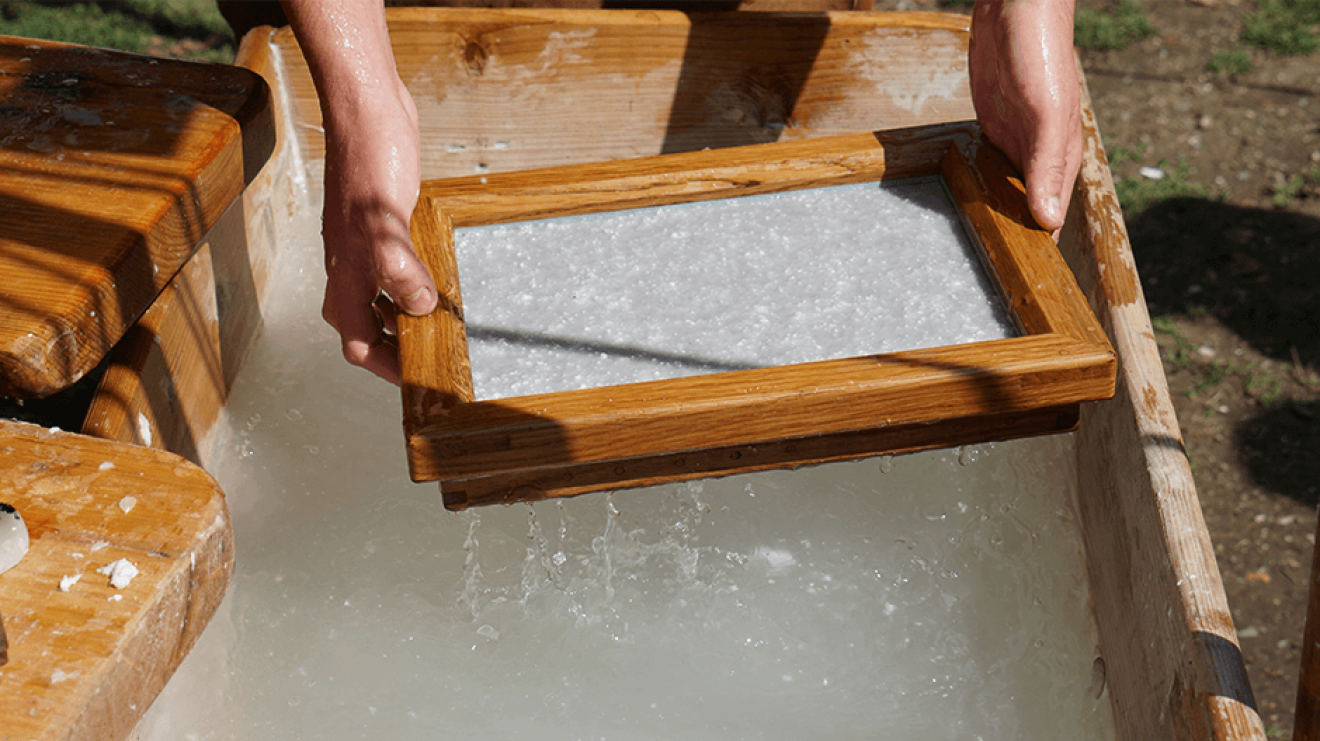
Throughout history, people have always felt the urge to record things and preserve them for posterity. This is evidenced by the cave paintings created with pigment from the Stone Age. Paper itself has been around for around 5,000 years. The Egyptians made their first attempts with Papyrus plants, which ultimately also served as the inspiration for the name of the new invention. The original form of paper, as we know it today, originated in China, and it was here that, for the first time, a Pulp made from plant fibres worked on.
Historical fact: In the year 105 AD, Ts’ai Lun, an official at the Chinese imperial court, reported on this groundbreaking invention.
What is paper made of?
Paper consists essentially of the following components:
- Fibres (pulp, groundwood, semi-cellulose)
- Fillers (chalk, kaolin, talc, gypsum, barium sulphate, titanium white)
- Starch (potatoes, maize)
- Auxiliary materials (retention agents, dyes, flocculants)
- Water
Depending on the type and intended use, more, less or no wood is used.
How is paper made?
The paper pulp (cellulose + fillers + starch + additives + water) is fed into the machine. The fibre pulp is distributed evenly across the conveyor belt by its oscillating movements. Screen printing section. The fibres settle on the screen, and the water runs off. In the Press section the remaining water is extracted by mechanical pressing, then the paper passes through the Drying section. The paper is then rolled up or undergoes a further processing step, namely coating.
This process results in the Finished paper surface, further refined by the application of binding agents, resulting in the so-called ‘line’. As Coating inks funds are allocated from Chalk, kaolin, casein or plastic dispersion used to seal the paper and ensure smoother and more durable surfaces. Uncoated paper has a rougher texture; on closer inspection, the individual fibres of the paper are still visible.
Coated vs. uncoatedCoated vs. uncoated paper
Available in matt, semi-matt and gloss finishes | Natural feel and appearance
Smooth surface, better printability | Rough surface, subtle & matt print finish
High colour vibrancy | Lower colour vibrancy
Photo paper, art paper, ... | Copier paper, offset paper, uncoated paper
Suitable for leaflets, business cards | leaflets, cards, paperbacks, ...
When working with paper, it is particularly important to know the grain direction of the paper being used. This actually refers to the Orientation of the paper fibres, which make the material stable or unstable. If you fold the paper against the grain in this way, it may tear or become brittle. This is, of course, of the utmost importance for printing.
Paper weight
This refers to the grammage of paper and simply indicates how many grams of paper there are per square metre. The paper’s intended use depends on this figure. For a roll-fold folder, paper that is neither too thin nor too thick should be chosen.
| Weight g/m² | Paper type | Intended use |
| Up to 25 | Tissue paper | Crafts, flower packaging, ... |
| 25-60 | Thin printing paper | Reference works Package inserts Legal texts |
| 80-120 | Copy paper Bulk paper Recycled paper Premium paper Book printing paper Art paper/picture printing paper | Letterhead Flyer Folded leaflet Newspapers Magazine Books |
| 150-250 | Medium-weight card: Art-print cardboard/picture-print cardboard Recycled cardboard Fine-grain papers | Business cards Flyer Conditionally folded leaflet Newspapers & Magazines |
| 250-600 | Cardboard: Art-print cardboard/picture-print cardboard High-volume cardboard Cotton-blend card | Business cards Flyer Cards |
| from 600 | Cardboard: Corrugated cardboard Multi-layer cardboard with a coloured core | Shipping boxes Banana boxes Business cards & cards |
The world of paper is both exciting and diverse. And with a little knowledge and know-how, choosing the right paper is a piece of cake.
So, which one will be your favourite for your next print job?
PS: If you want to be really thorough and find out more than just ‘blindly selecting a candidate’, you can get a first impression of the paper from us. Quite unlike on a chat show ;)
Simply select the desired items in the shop Order free samples, or contact us Get detailed advice in the customer centre.